

The Chronic Infection Reality: A New Clinical Framework
Chronic infections don’t follow the textbook.
They don’t present with neat, obvious symptoms that point to clear diagnoses. Instead, they create a constellation of seemingly unrelated complaints that leave both practitioners and patients frustrated. The joint pain that migrates. The fatigue that rest doesn’t touch. The digestive issues that dietary changes can’t resolve.
We’ve Been Approaching This All Wrong
For over 20 years at DesBio, we’ve observed a pattern that conventional medicine continues to miss: chronic infections rarely exist in isolation. They create ecosystems. They communicate with each other. They alter the terrain of the body in ways that perpetuate illness long after the initial infection should have resolved.
Understanding the New Pathogen Paradigm
Today’s pathogens have evolved beyond our traditional understanding. Through biofilm formation, cell wall deficient forms, and sophisticated immune evasion tactics, they’ve learned to persist in ways that make standard antimicrobial approaches obsolete.
Consider what we’re really dealing with:
Biofilms: Coordinated Colonies
Biofilms protect communities of mixed pathogens—bacteria, fungi, parasites—all sharing resources and resistance mechanisms. These aren’t individual infections anymore; they’re coordinated colonies that our immune systems can’t penetrate. Studies show biofilms increase antimicrobial resistance by up to 1,000 fold.
Viral Persistence: Masters of Manipulation
Viral persistence has reached new levels of sophistication. Epstein-Barr virus, present in 95% of adults, has mastered the art of dormancy and reactivation. It doesn’t just hide—it actively manipulates immune responses, creating an environment where other pathogens thrive. Recent research links EBV reactivation to everything from Hashimoto’s thyroiditis to certain lymphomas.
Intestinal Pathogens: The Gut-Brain Hijackers
Intestinal pathogens have learned to manipulate our neurotransmitters, affecting mood and cognition in ways that seem completely disconnected from gut health. That anxiety your patient can’t explain? The depressive issues that don’t respond to SSRIs? Often, it starts in the gut with infections producing neurotoxins and inflammatory cytokines.
Three Solutions, One Integrated Approach
The answer isn’t more aggressive antimicrobials. It’s smarter ones. It’s addressing the terrain that allows infections to persist. It’s supporting the body’s innate intelligence rather than trying to override it.
Smart Silver: Beyond Traditional Antimicrobials
Smart Silver represents a fundamental shift in how we approach antimicrobial support. Using engineered nanoparticles that resonate at the same frequency as germicidal UV light, this technology disrupts pathogens through multiple mechanisms simultaneously.
The electron theft mechanism ruptures pathogen cell walls while the electromagnetic resonance creates an environment hostile to microbial life. At 96.8% bioavailability and just 10 PPM concentration, we’re seeing effectiveness without the risks associated with traditional silver products.
Clinical Applications Beyond the Obvious:
• Nebulized for respiratory infections that won’t clear
• Added to nasal irrigation (without salt) for any sinus issues
• Used topically for non-healing wounds
• Taken internally during any antimicrobial protocol to prevent resistance
PathoGuard: Disrupting the Biofilm Fortress
The gut houses 70% of our immune system, so that is why many chronic infections establish their most fortified positions there. PathoGuard was formulated specifically to address what other antimicrobials miss: the complex biofilm communities protecting gut pathogens.
The synergistic combination works through multiple pathways:
• Berberine alters the gut environment, making it inhospitable to pathogenic bacteria while supporting beneficial flora
• Monolaurin disrupts lipid-coated organisms and helps break down biofilm matrix
• Sweet Wormwood addresses parasitic infections often missed by standard testing
• Black Walnut Hull provides broad-spectrum antimicrobial activity
• Elderberry prevents viral replication at the cellular level
What makes PathoGuard unique is its ability to work progressively. Rather than creating a harsh die-off that overwhelms the system, it helps the body systematically dismantle pathogen communities while supporting the body’s elimination pathways.
EPST Phase 1: Addressing Viral Persistence
Epstein-Barr virus deserves special attention. It’s not just another infection—it’s a master manipulator that creates conditions for other pathogens to flourish. The virus integrates into B-cell DNA, establishes latency in multiple tissue types, and reactivates strategically when the immune system is compromised.
EPST Phase 1 uses Series Therapy—graduated homeopathic potencies delivered over 60 days—to retrain immune recognition of both active and dormant viral forms. This isn’t about suppression; it’s about education. We’re teaching the immune system to identify and address EBV in all its forms.
The protocol addresses three critical aspects:
• Viral burden through homeopathic nosodes and Smart Silver
• Inflammatory response with Liposomal Resveratrol Curcumin
• Emotional impact using the Motivation formula for viral-induced occasional depressive symptoms
The Co-Infection Web: Mapping the Connections
Understanding how infections interact changes everything about the treatment approach. Here’s what we commonly see:
The Cascade Effect
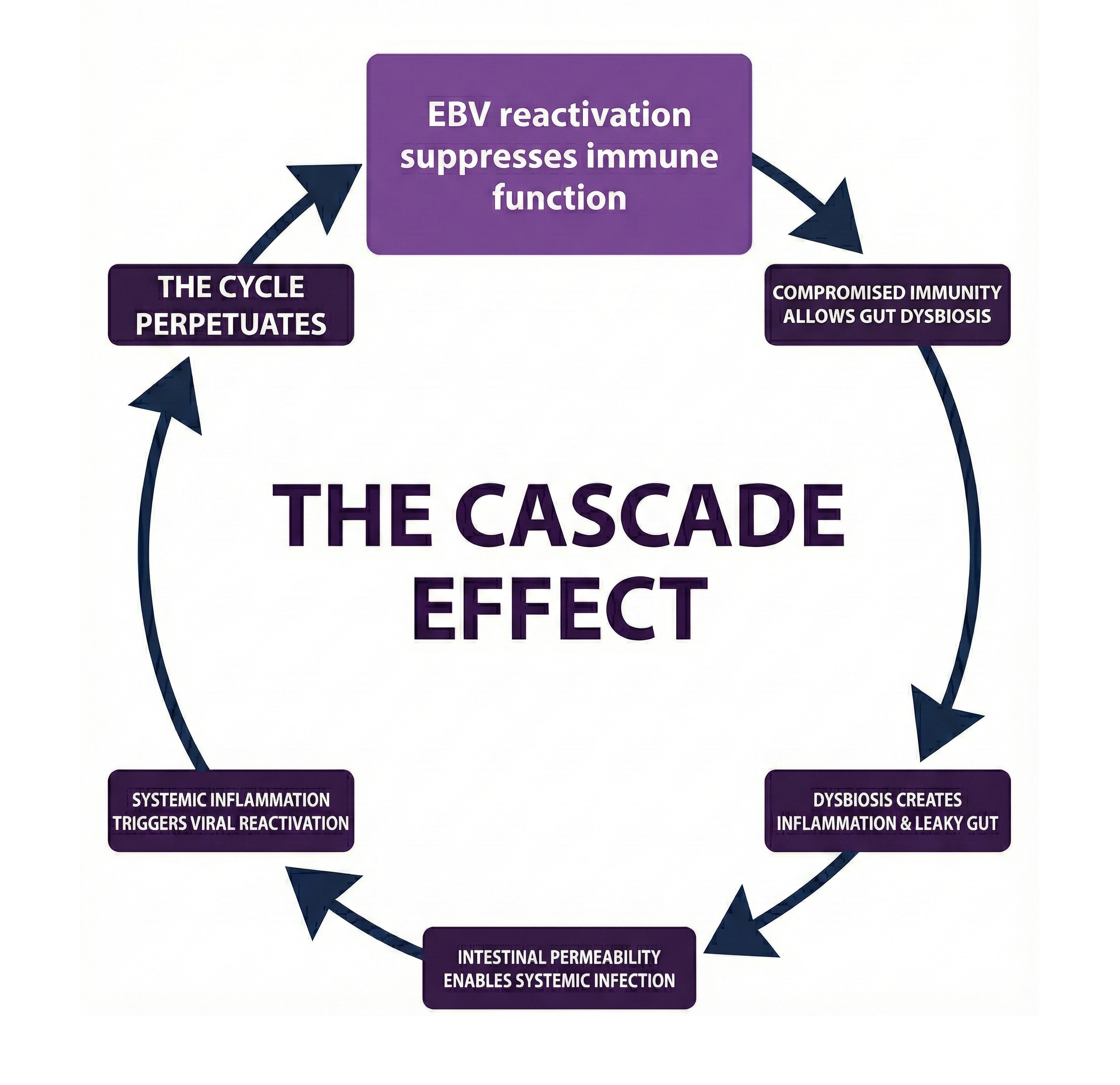
This is why addressing single infections fails. You must approach the entire web systematically.
Clinical Implementation: A Practical Framework
Assessment Phase
Rather than expensive testing that often misses chronic infections, consider the clinical picture:
The Test-and-Treat Approach
Start with Smart Silver and basic drainage support. If patients improve even slightly, you’ve confirmed infection involvement. This clinical response often tells you more than laboratory testing.
Troubleshooting Common Challenges
Severe Herxheimer Reactions
• Reduce dosing by 50%
• Increase drainage support
• Add binders like ToxAffix
• Consider targeted homeopathic drainage remedies
• Ensure adequate hydration and minerals
Plateau in Progress
• Evaluate for mold exposure
• Check for dental infections
• Consider heavy metal burden
• Address emotional/trauma components
• Review environmental factors
Recurring Infections
• Assess home/work environment for mold exposure or re-infection possibilities
• Evaluate immune system fundamentals
• Consider genetic factors (HLA-DR, etc.)
• Address biofilm more aggressively
• Look for missed co-infections
The Practitioner Advantage
Using Smart Silver, PathoGuard, and EPST Phase 1 together provides:
Moving Forward
Chronic infections require a new framework—one that recognizes their complexity, their interconnections, and their impact on every system in the body. Smart Silver, PathoGuard, and EPST Phase 1 provide the tools. Your clinical expertise provides the implementation.
The goal isn’t to eliminate every pathogen—it’s to support the terrain so pathogens can’t establish chronic residence. This is precision work, not warfare.
Ready to develop your chronic infection expertise? Our medical education team provides one-on-one consultations to help you create protocols specific to your patient population. Join our practitioner-only community for ongoing support, case discussions, and protocol refinements.
DesBio empowers practitioners and their patients through targeted supplements and homeopathic remedies. DesBio is more than just a product company, we are a partner in your practice. Our practitioners have direct access to consults with our team of medical educators and our training and educational programs focus on diagnostic strategies, clinical how-tos, case studies, and troubleshooting tips to help you manage the increasingly complex needs of your patient base.
Join Our Practitioner Community
If you are a healthcare practitioner and would like to join our DesBio practitioner community, take the next step today.
These statements have not been evaluated by the Food and Drug Administration. These products are not intended to diagnose, treat, cure, or prevent any disease. Homeopathics are for the temporary relief of symptoms, and dietary supplements support the structure/function of the body.